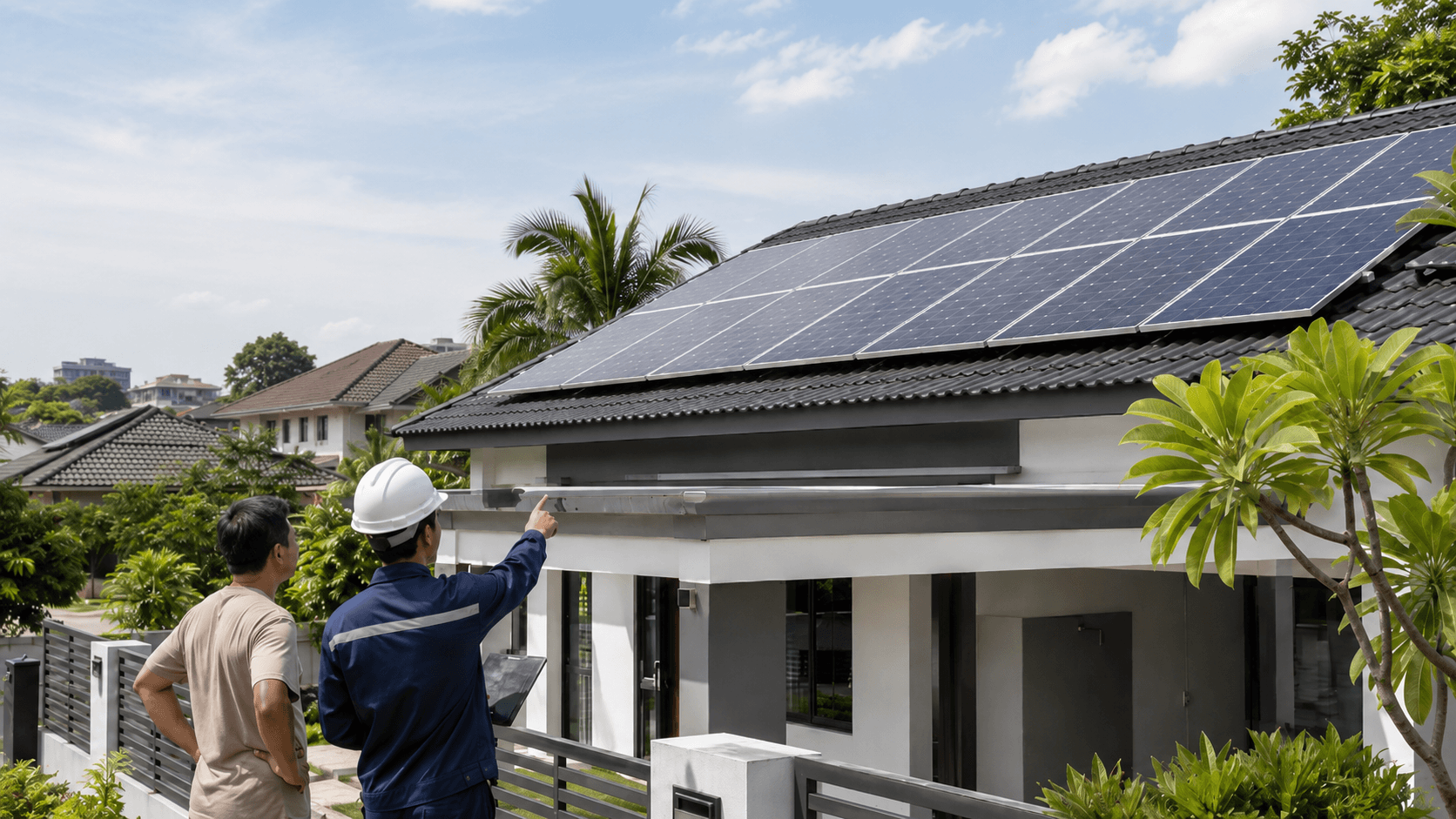
Roof Solar Panels Malaysia What to Know Before Installing Solar on Your Roof

Roof Solar Panels Malaysia: What to Know Before Installing Solar on Your Roof

Thinking about going solar? You are not alone. With electricity tariffs rising and Malaysia’s solar incentive programmes like Solar ATAP making rooftop solar more accessible than ever, more homeowners and business owners are looking up at their roofs and asking: is mine ready for solar panels?

Before signing any agreement or committing to an installation, there are several important factors every property owner in Malaysia should understand — from your roof’s structural condition and orientation to the key differences between conventional roof solar panels and the increasingly talked-about solar power roof tiles. Getting these fundamentals right from the start saves you time, money, and potential headaches down the road.

This guide walks you through everything you need to know before installing solar on your roof in Malaysia.

Key Takeaways

  • Not every roof is immediately solar-ready — condition, material, orientation, and available space all affect the suitability of your rooftop for a solar PV system.
  • Solar ATAP is Malaysia’s primary residential solar incentive programme, making rooftop solar accessible to homeowners with eligible roof configurations.
  • Conventional roof solar panels and solar power roof tiles serve different needs — understanding the difference helps you make the right choice for your property.
  • A south- or west-facing roof with minimal shading and a tilt angle of 10 to 20 degrees delivers the best solar performance in Malaysia’s climate.
  • Always engage a certified, SEDA-registered solar EPCC company for a proper site assessment before committing to any system design.

What Is Solar ATAP and Why Does It Matter?

Solar ATAP (Skim Solar Atap) is Malaysia’s government-backed rooftop solar programme administered by the Energy Commission, designed specifically for residential consumers. Under Solar ATAP, homeowners install a solar PV system on their rooftop and consume the electricity generated directly, with excess energy exported to the TNB grid under a Net Energy Metering (NEM) arrangement.

The programme has made roof solar power more attainable for the average Malaysian homeowner, as it reduces the upfront barrier through structured system sizing guidelines and grid connection approval pathways. For properties that qualify, Solar ATAP offers a clear and well-supported route to lower electricity bills and long-term energy savings.

However, eligibility under Solar ATAP — and the performance of your system once installed — depends heavily on whether your roof is genuinely ready for solar. That assessment starts well before any panel is mounted.

For a deeper look at how Solar ATAP compares to other solar programmes like SELCO, read our guide on Solar ATAP vs SELCO Malaysia.

Is Your Roof Ready for Solar Panels?

A site assessment by a qualified solar installer will cover several key checks. Here is what matters most.

1. Roof Condition and Structural Integrity

Before anything else, your roof must be structurally sound enough to carry the additional load of solar panels. A standard solar PV installation adds approximately 15 to 25 kg per square metre of dead load to your roof structure. If your roof is ageing, has water damage, corroded purlins, or cracked tiles, these issues must be resolved before installation proceeds.

Installing solar panels on a compromised roof is a false economy — if the roof needs replacement five years after the panels go on, the cost of temporarily removing and reinstalling the system can be significant.

2. Roof Type and Material

Different roof types have different levels of compatibility with solar mounting systems.

Metal / IBR roofs are the most common and most straightforward for solar installation in Malaysia. Mounting brackets can be fixed securely to the purlins, and the roof’s load capacity is generally well-suited to standard panel weight.

Flat concrete roofs offer excellent flexibility. Panels can be mounted at an optimum tilt angle using ballasted racking systems, and the open surface area typically allows for a larger system size.

Tile roofs (clay or concrete) require more care during installation, as individual tiles need to be removed and replaced around the mounting hooks. This adds time and cost, and older tiles can become brittle during the process.

Asbestos / Zinc roofs are generally not recommended without reinforcement or replacement, as they may not reliably support the mounting loads and may present safety risks.

3. Roof Orientation and Tilt Angle

In Malaysia, south-facing roofs capture the most consistent solar irradiance throughout the year, as the sun tracks across the northern sky. West-facing roofs are also productive, particularly for capturing afternoon generation that aligns with peak household electricity usage.

An ideal roof tilt angle for solar panels in Malaysia falls between 10 and 20 degrees from horizontal. This range balances energy generation and self-cleaning by rainfall — an important consideration given Malaysia’s frequent rain.

North-facing roof sections are generally less productive but can still be viable depending on the system design and available roof area.

4. Shading Analysis

Shading is one of the most impactful factors on solar system performance. Even partial shading from a water tank, neighbouring building, tree, or telecommunications equipment can significantly reduce output — particularly in string inverter configurations where one shaded panel affects the entire string.

During a site assessment, your solar installer should perform a shading analysis using solar pathfinder tools or software modelling to quantify the shading impact across different times of day and seasons.

5. Available Roof Space

As a general rule, each kilowatt (kW) of solar capacity requires approximately 10 square metres of unobstructed roof space. A typical residential system of 6 to 10 kWp therefore requires 60 to 100 square metres of usable roof area.
Roof features such as air-conditioning units, water tanks, vents, skylights, and parapet walls all reduce usable area and must be accounted for in the system design. Your solar provider should produce a detailed layout showing panel placement before finalising the system size.

Solar Power Roof Tiles vs Conventional Roof Solar Panels

One of the most common questions homeowners ask today is whether to go with traditional roof solar panels or the newer solar power roof tiles. Both generate electricity from sunlight, but they differ significantly in design, cost, performance, and suitability.

What Are Conventional Roof Solar Panels?

Conventional roof solar panels are photovoltaic modules mounted on top of your existing roof using racking and brackets. They are the proven, widely-deployed technology that powers the majority of solar installations across Malaysia today — from homes to factories to commercial buildings.

Key characteristics:

  • Installed above the existing roof surface on a mounting system
  • Available in monocrystalline, polycrystalline, and bifacial configurations
  • Typical efficiency range: 19% to 23% for premium monocrystalline panels
  • Straightforward to replace, upgrade, or repair individual panels
  • Eligible for Solar ATAP and all current Malaysian solar incentive programmes
  • Lower installed cost per watt compared to solar roof tiles

What Are Solar Power Roof Tiles?

Solar power roof tiles — sometimes called solar shingles or Building-Integrated Photovoltaics (BIPV) — are designed to replace the conventional roof covering entirely. Instead of panels sitting on top of tiles, the solar cells are integrated directly into the tile or shingle material, functioning as both the roof waterproofing layer and the power-generating surface.

Key characteristics:

  • Replace conventional roofing material entirely rather than being mounted on top
  • Offer a seamless, low-profile aesthetic that blends with the roofline
  • Significantly higher installed cost compared to conventional panels
  • Lower energy density per square metre than conventional panels in most configurations
  • Better suited to new construction or full roof replacement projects
  • Not yet widely deployed under Malaysia’s current Solar ATAP framework

Side-by-Side Comparison

Feature

Conventional Roof Solar Panels

Solar Power Roof Tiles

Installation

Mounted on existing roof

Replaces existing roof

Aesthetic

Visible panels above roofline

Flush, integrated look

Efficiency

Higher (19–23%)

Generally lower

Cost

Lower per watt

Significantly higher

Best for

Most existing buildings

New builds / full reroofs

Solar ATAP eligible

Yes

Limited / case-by-case

Repairability

Easy to replace panels

More complex to replace tiles

Availability in Malaysia

Widely available

Limited suppliers

The bottom line: For the vast majority of Malaysian homeowners and commercial property owners installing solar today, conventional roof solar panels remain the more cost-effective and practical choice. Solar power roof tiles are an exciting technology with strong aesthetic appeal, but they are best suited to new construction projects or full roof replacement scenarios where the premium cost can be justified.

If you are renovating or building a new home and want an integrated look, solar roof tiles are worth exploring. For most existing properties, conventional roof solar panels under Solar ATAP deliver the strongest return on investment.

What Happens During a Professional Roof Solar Assessment?

A thorough pre-installation assessment by a qualified EPCC company covers the following:

Structural evaluation — Visual inspection of roof framing, purlin condition, and material integrity to confirm load-bearing capacity.

Solar resource analysis — Assessment of roof orientation, tilt, and shading to estimate annual energy yield.

Electrical infrastructure review — Assessment of your existing distribution board, incoming supply capacity, and meter configuration to determine inverter sizing and grid connection requirements.

System design and proposal — A detailed layout of panel placement, system size in kWp, estimated annual generation in kWh, projected bill savings, and payback period.

Regulatory and incentive guidance — Advice on Solar ATAP eligibility, NEM application process, and TNB interconnection requirements for your property type.

At Ray Go Solar, our solar assessment covers all of the above, with a dedicated team of ISPQ-certified engineers who have delivered solar installations across hundreds of Malaysian homes and businesses.

Common Roof Issues That Need Resolving Before Solar Installation

Even well-maintained roofs sometimes require attention before panels go on. Common issues identified during pre-installation assessments include:

  • Corroded or weakened purlins — particularly common in older metal-roof industrial and commercial buildings
  • Loose or cracked roof tiles — need replacing before mounting brackets are fixed
  • Inadequate waterproofing around existing penetrations — must be addressed to prevent water ingress at new bracket fixings
  • Insufficient structural framing for the panel load — may require reinforcement, particularly for flat roofs carrying ballasted systems
  • Ageing electrical distribution boards — may need upgrading to accommodate the inverter connection

A reputable solar installer will flag all of these during the assessment and can coordinate remedial works as part of the project, or advise you on engaging a separate contractor before solar installation begins.

How Much Does a Residential Roof Solar System Cost in Malaysia?

System cost depends on capacity, panel brand, inverter technology, and the complexity of your roof and electrical infrastructure. As a general reference, a typical 6.2 kWp residential solar system in Malaysia costs approximately RM 21,000 before any applicable incentives.

Larger systems for homes with higher electricity consumption — in the 8 to 12 kWp range — typically fall between RM 28,000 and RM 45,000 depending on specifications.

For a detailed estimate based on your specific property and monthly electricity bill, use our solar panel installation cost guide or speak directly with our team for a personalised assessment.

Ready to Find Out If Your Roof Is Solar-Ready?

Malaysia’s solar market is growing rapidly, and rooftop solar under Solar ATAP remains one of the most accessible and financially rewarding renewable energy investments available to Malaysian property owners today. The key to a successful installation is starting with a proper assessment — not just of your budget, but of your roof.

Whether you own a terrace house in Selangor, a semi-detached in Penang, or a commercial shophouse in Johor, Ray Go Solar’s team of certified engineers is ready to evaluate your roof, design the right system, and guide you through the Solar ATAP application process from start to finish.

Get a free solar assessment today, or explore our residential solar solutions and commercial solar services to learn more about what we can deliver for your property.

Ray Go Solar is a SEDA-recognised, ISPQ-certified solar EPCC company with 13+ years of experience delivering residential, commercial, and industrial solar solutions across Malaysia.